Zen and the Art of Motorcycle Maintenance
By Robert M. Pirsig
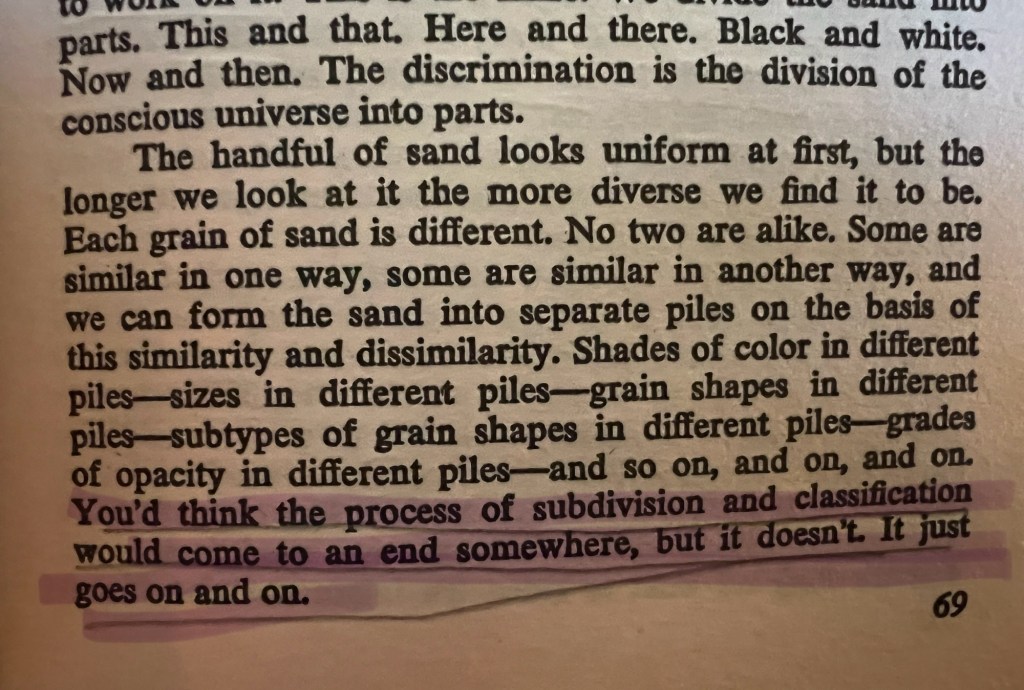
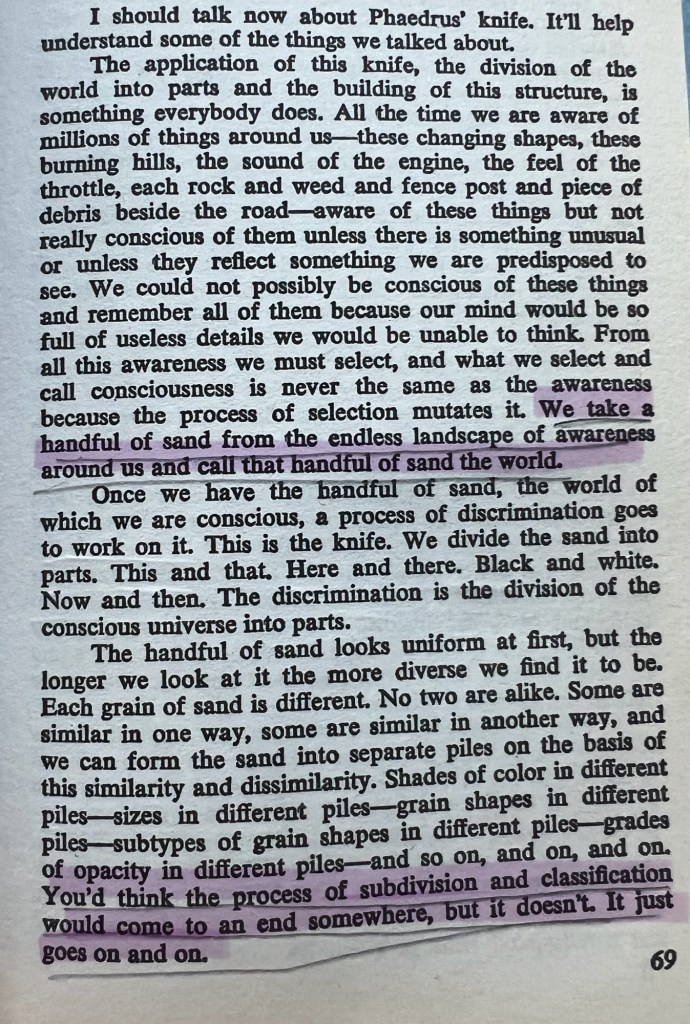
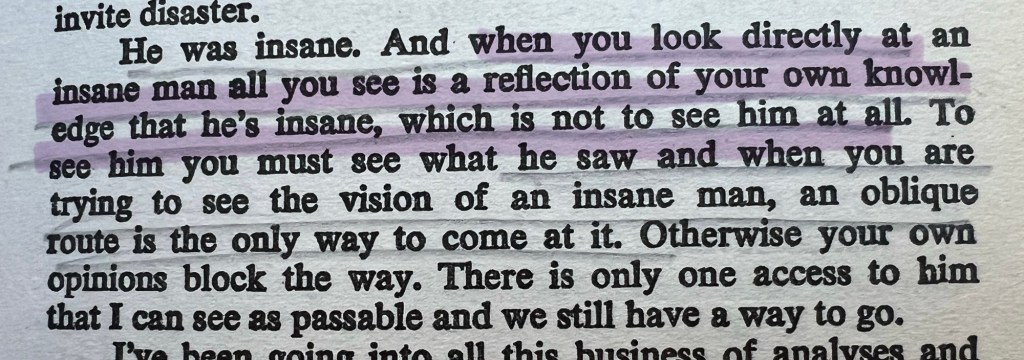
I’m trying to predict stock prices with AI. This quote is amazingly applicable, so much so that reading it yesterday borders on or sits in the big grey line that may classify an event as a Jungian synchronicity event.
(I think Carl might have erred slightly with that term… it’s hard to use and I think I used it incorrectly but I’m not sure how to correct it either: a semi-synchronicitic event? I’ve triggered spellcheck there…)
This reminds me of something I’ve heard Alan Watts say as well. I’m going to goof this “quote” a bit but it goes something like:
“We think of ourselves now as empirical and scientific but it is just an illusion. Because it’s impossible to analyze all the information pertinent to any decision – because the information is always infinite. The most careful, analytical, empirical, scientific person you can think of – they are just as impulsive as everyone else. You can analyze and think and analyze and think again and… eventually you just make a snap judgement.”
I shouldn’t put that in quotes… the main idea is the same and I think I got some of the words correct but… please don’t quote that quote.
When he mentions infinite information, he touches on the idea that we can never think of and analyze all of the things that may happen. This touches on the idea of “survivorship bias” – again, I should google or use chatgpt here to make sure I’m getting that term correct. There are so many Kahneman coined biases these days… I remember reading about this bias in a Nicholas Taleb book (I have a love / hate relationship with this guy – incredibly pompous and therefore off-putting but… his arrogance is… I don’t want to say it… at least partially justifiable.)
The idea there was: We read these books that promise to teach us how to achieve something. The author analyzed the big winners and they all did A, B, C… And so the conclusion is: do A, B, C and voila, pack your bags for Davos.
But what about all the people who did A, B and C and failed? Where is their lack of accomplishment recorded? Of course it isn’t.
One idea leads to the next and… this quote is from a chapter where Pirsig is explaining who Phaedrus was, what his ideas were about, and why he is important.
Phaedrus is a character in one of Plato’s Socrates dialogues. When I googled his name I thought it interesting that Pirsig and Zen and the Art of Motorcycle Maintenance was the third result. Not a lot of people reading Plato’s lesser known works these days… (perhaps this has always been true)
I thought it interesting that Pirsig calls Phaedrus insane, multiple times, and at the same time has tremendous admiration for him.
Which box is he in Robert?
Perhaps this is an example that relates directly to Pirsig’s discourse on the discourse.
Classify and analyze until the cows come home – Phaedrus doesn’t fit into one nice neat little box.
And perhaps that is true for every single thing – without exception – in the entire universe.
I will butcher another quote coined by I-forget-who: “There is only one true indivisible atom and it is the universe.”
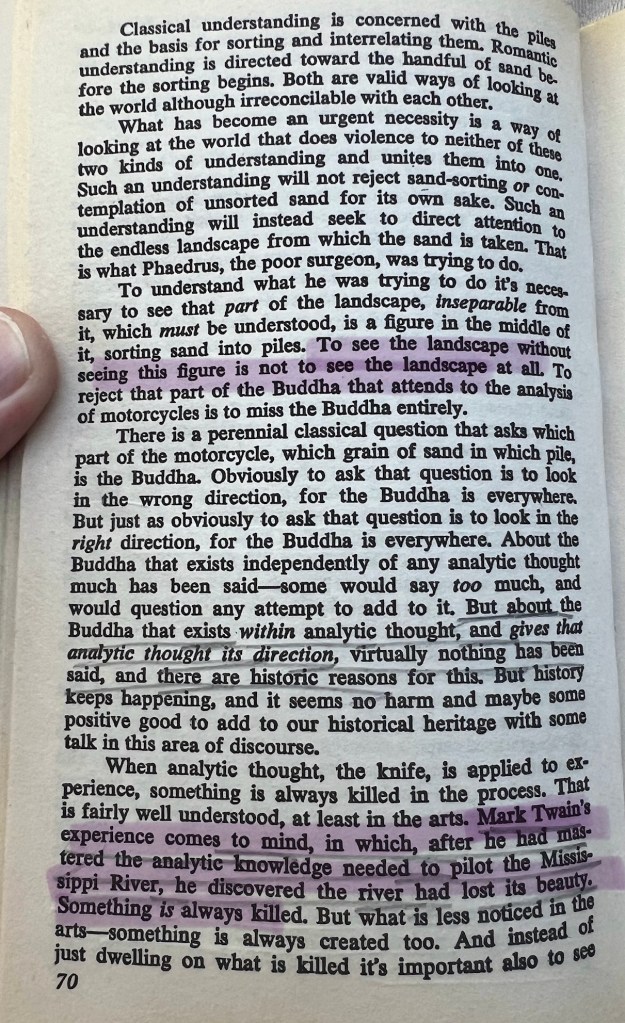
P.S. Here’s a couple more pages / paragraphs, the quote above right in the middle. I particularly enjoy the Mark Twain reference and I’ve wondered about this professional endeavor of mine, analogous to Frodo’s little walk to Mordor: by the time I’m done with this thing, and to generously assume I’m successful, am I still going to have the time to enjoy myself and that success? Is my life passing me by while I fight with this giant beast of a number cruncher that I’ve built? Am I dedicating too much of myself and my time to abstractions of abstractions of abstractions… as my view of the landscape progresses ever further out of focus? Oof. That’s a bit of a grim way to end this post especially when my next activity is to hike down to the basement and work on this number cruncher…
Nothing fits neatly into any box. Paradox seems to both plague and invigorate, completely pervasive and never present.
Ok… time to crunch some numbers…
 AwesomeWriters